Finance
Rethinking Sales Strategy Through Capability Stability
The Challenge
A wealth management firm believed the answer to hitting its revenue targets was more sales consultants; and it was prepared to invest upwards of half a million dollars to hire them.
The Automation Readiness Audit's Value
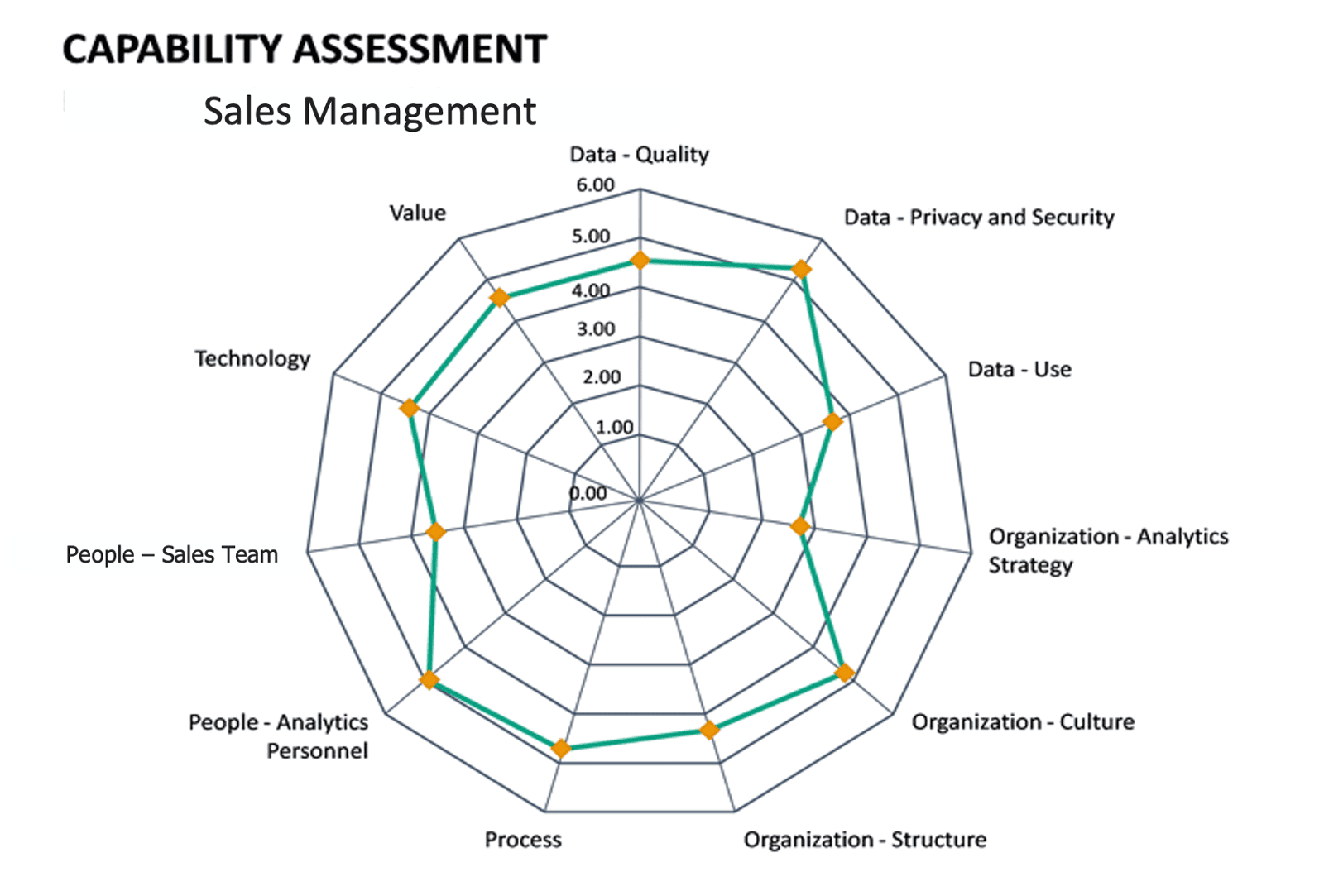
Before the firm committed that money, we evaluated the maturity of its people-process integrity, tech readiness and goverance behind its sales capabilities. The assessment surfaced what the "hire more people" instinct had hidden: gaps in the back-office processes supporting the sales teams, and aging technologies those teams relied on for fulfillment and support. A capability radar chart made the picture concrete, plotting maturity across data quality, privacy and security, analytics strategy, culture, structure, process, and technology.
Risk Reduced / ROI Protected
Instead of spending half a million on new headcount, the firm agreed to build programs of work in the near and medium term to upgrade its lower maturity capability foundations; and deferred the additional sales consultants to a longer-term initiative. Resources went to the highest-impact areas first, setting the stage for more efficient operations, smoother customer and employee onboarding, and a more sustainable growth trajectory.
Know what your firm's automation foundations are?
Ready to face the challenge?

A Community Avoids the Tool "First-Trap"
The Challenge
A community bank, faced the same pressure every financial institution is under: adopt AI and automation, or fall behind. The temptation, and the trap most banks walked into was to start with "we need an AI strategy" and buy technology first. That approach treats AI as the mission itself, leaving organizations with expensive infrastructure and no clear capability to enhance. Their challenge was to avoid that trap and instead figure out what they were actually trying to get better at before touching a single tool.
The Automation Readiness Audit's Value
They didn't begin with AI. They began by defining the core experience they wanted to deliver: seamless, integrated financial management that fit into customers' daily lives. From there, they mapped the capabilities required to deliver that experience; simplified account opening, proactive financial advice, integrated payments, and more. Only after that foundational work was done did they evaluate how AI and automation could enhance those capabilities.
This is precisely the sequence an Automation Readiness Audit is designed to produce. Tracing the same three pillars; people-process integrity, tech readiness, and governance; across each impacted capability establishing the current-state health of the bank's value-creating processes before any technology decision. Identifying the specific capability gaps worth closing, then evaluating AI tools against how well they addressed those gaps; rather than letting a vendor's roadmap define the bank's strategy. In short, an audit that formalizes and accelerates exactly the capability-first discipline this group applied.
Risk Reduced / ROI Protected
Because the capabilities were mapped first, their AI and automation investments landed on well-defined, mature processes; and the results followed. Loan processing times dropped by 30%, and customer satisfaction improved significantly. The architectural clarity behind that outcome is not because it had the best AI, but because it used AI to make its fundamental capability, banking, radically better for its customers. The ROI wasn't a tool purchase; it was a capability made stronger, and the recognition that followed.
Know what your firm's automation foundations are?
Ready to face the challenge?
Insurance

The Transition That Kept Failing
The Challenge
An insurance company wanted to redesign its transition package; the booklet sent to members leaving their benefits plan. It was the third or fourth attempt, and each prior attempt had failed with little documented about why. The package was assembled through a fragile chain: a mainframe system handled the calculations, a rudimentary in-house tool produced the letter, and a mail room full of people manually matched brochures and inserts to each member's profile. The two systems couldn't integrate well enough to support the new booklet the company wanted. The team assumed it could deliver in under 12 months. Instead, it spent nearly two years in requirements; producing only two signed-off requirements documents before the project was cancelled.
The Automation Readiness Audit's Value
An automation readiness audit traced the people-process integrity, tech readiness, and governance behind package assembly; and compared the capabilities the process actually relied on against the look-and-feel changes the company wanted. That gap analysis exposed, relatively quickly, that this was a far bigger implementation than anyone had previously presumed. Had the Audit been done prior to the initiative being greenlit, it would have flagged the "on fire" areas from a capability standpoint, attached costs to each, and produced a prioritized roadmap showing where the quickest win actually was: change the look and feel via a different tool, while retiring the in-house tool and rebuilding the underlying system as separate, longer-term work.
Risk Reduced / ROI Protected
Given that the requirements phase had already completed, the Audit fared more-so as a post mortem than an immediate way forward. However, in comparison to the 24 months of requirements churn and project team turnover experienced, the Audit was completed within 2 full-day workshops. It took the company two years to reach the conclusion the Audit would have surfaced in a fraction of that time: that the fastest win was a cosmetic change, not a full end to end rebuild. More importantly, it would have captured the lessons from the prior failed attempts; what worked, what blocked progress, and what it cost; so the next attempt could start from knowledge instead of from loose scratch.
Know what your firm's automation foundations are?
Ready to face the challenge?
Health
From Chaos to Clarity: A Hospital Move
The Challenge
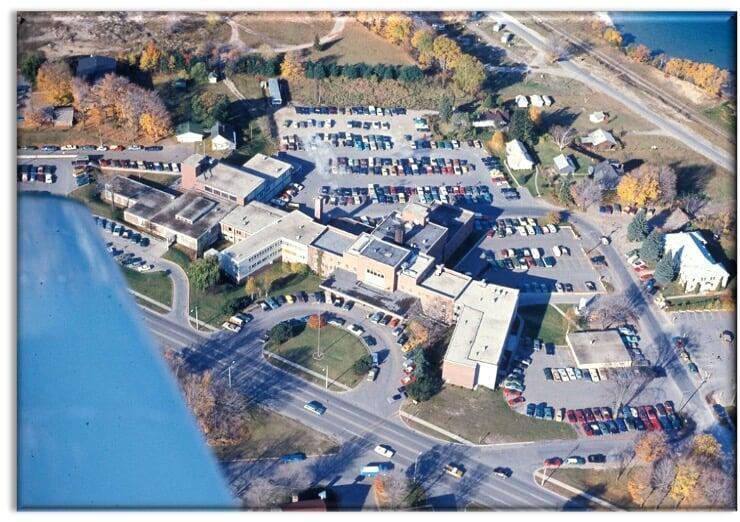
A small Michigan community hospital was moving from its old building into a brand-new facility three times its size. What looked like a windfall quickly turned to worry. Clinicians and staff were used to working in close quarters; calling out to a colleague in the hallway, hearing patient alarms from the next room. In the new footprint, none of that would work. Communication, care coordination, and handoffs all needed new patterns, and the move was scheduled in under 12 months. They were already behind.
The Automation Readiness Audit's Value
We started by building a current-state picture everyone could understand: a series of "Patient Journeys" that clearly indicated which People/Process, Tech Readiness and Governance dependencies mapped to the hospital's current clinical and administrative capabilities. Where gaps existed, we flagged them as "hot zones" that needed attention to keep the journeys from breaking down. Department by department, teams walked through these journeys; seeing, often for the first time, where they crossed paths, depended on, and sometimes stepped on each other. That shared view unlocked the conversations that had been missing: the specific communication requirements for each team, the data each team needed to make care decisions at or away from the bedside, and the technology available (or needed) to support it all.
Risk Reduced / ROI Protected
Roughly ten months later, the doors of the new facility opened on schedule, and patients moved floor by floor in an orderly, emotional transition. Teams that had once operated as "separate streets and blocks" now talked and thought "like a village." Staff began asking, "What's your part in the Journey today?" a phrase no one used before. The payoff showed up in moments like NICU alarms arriving as timely notifications on clinicians' phones, connected to a centralized and monitored communication system. The hospital completed its move on time, with alignment, buy-in, and the clarity to keep delivering quality care in a larger, more complex space.